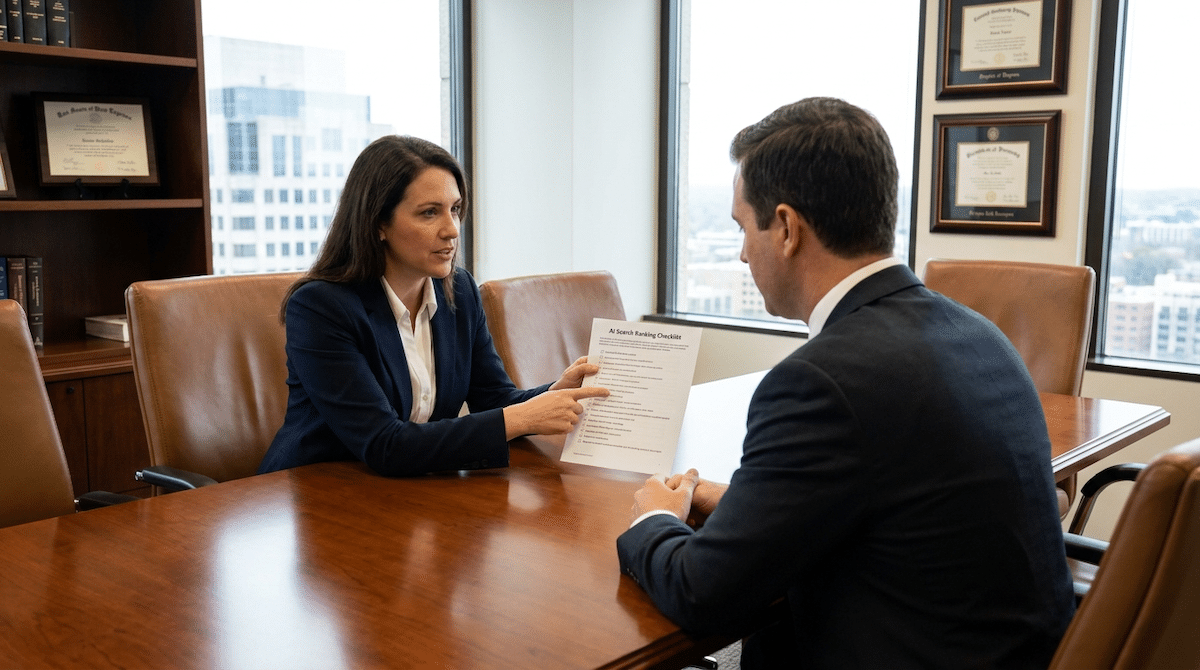
This is the exact checklist we use at The Active Media when onboarding clients for Answer Engine Optimization in 2026. Not a theory deck. Not a blog post recycled from 2023. This is the structured process we walk through to get your brand cited, quoted, and recommended inside Google AI Overviews, ChatGPT, Perplexity, and Gemini.
Key Takeaways
This AEO checklist is the same client onboarding checklist we run internally at The Active Media for every new engagement focused on AI search visibility. It covers technical access for AI bots, content structure and extractability, brand authority and E-E-A-T signals, and ongoing measurement – so you know exactly what to expect before your first strategy call.
- Most wins in AI Overviews come from fixing crawl issues, restructuring content into answer-first sections, and tightening topical authority around your core commercial topics. Only 30% of brands remain visible across answer engines, which means there’s real ground to gain.
- This is not generic SEO. An Answer Engine Optimization (AEO) checklist helps structure content for AI platforms by focusing on citation frequency, extractability, and entity clarity – not just keyword stuffing or link counts.
- AEO focuses on ranking answers, not web pages. The unit of visibility has shifted from blue links to the actual paragraph, list, or table that AI reads back to users.
- A well-structured onboarding experience accelerates time-to-value, and this checklist is designed to deliver measurable outcomes within the first 90 days.
- Ready to see how your site performs? Book a strategy call with The Active Media and we’ll run this checklist on your domain.
1. What We Mean by AEO (and Why It Matters in 2026)
Answer Engine Optimization is the practice of structuring your content, technical architecture, and brand signals so that AI systems can retrieve, summarize, cite, and present your content as the answer to a user’s question. We’re not talking about traditional rankings alone. We’re talking about being the source that Gemini quotes or ChatGPT recommends.
Google published its generative AI optimization guide in May 2026, making this official guidance – not speculation. AI Overviews rolled out to all U.S. users back in 2024, and roughly 47% of informational queries now trigger them. That’s nearly half of the questions your buyers are asking.
Here’s the contrast: traditional seo audits focus on keywords and backlinks. AEO audits evaluate content performance in AI answer engines – measuring how often your content is cited, quoted, and reused by AI. Traditional search still matters, but if you’re invisible in answer engines, you’re missing the first conversation prospects have about your category.
This checklist is for ambitious B2B and local service brands investing at least $3K/month in SEO services who want measurable ai visibility, not experiments, and who are evaluating whether ongoing monthly SEO services are worth the investment. Your prospects are now “onboarded” by AI before they ever visit your site. That’s the new customer onboarding reality – answer engines answer early questions about your business before your sales team gets a chance.
2. AEO Client Onboarding Checklist Overview
This is the master client onboarding checklist we use for every AEO engagement. Client onboarding is a multi-step process from welcome to support, and we’ve built ours to move fast without cutting corners.
The structured process flows like this:
- Intake and discovery – contracts, access, onboarding questionnaire
- Technical and data audit – crawlability, bot access, Core Web Vitals
- Content structure and extractability – heading hierarchy, answer-first formatting
- Authority and brand entity – E-E-A-T, external validation, NAP consistency
- Implementation roadmap – 30-60-90 day plan with key milestones
- Measurement and follow up – AI visibility tracking, regular reporting, customer feedback
This checklist sits alongside the broader onboarding activities (contracts, billing, kickoff) but is 100% focused on ai visibility. Every finding and action item gets logged in our customer relationship management system so we deliver consistent results across every engagement and maintain a trackable client experience.
Each section below spells out exactly what we check, what tools we use, and what “done” looks like in the context of Google’s AI Mode reshaping SEO and AI citations.
3. Pre-Engagement: Contracts, Access, and Intake
Before we touch anything AEO-related, we complete standard onboarding clients tasks to protect both sides and reduce churn from the start. Research shows 63% of customers consider onboarding crucial for business decisions, and 74% of customers would switch for complicated onboarding processes. So we keep this clean.
What happens here:
- Engagement letter signed – MSA or retainer agreement (typically 12 months for SEO/AEO), covering scope, deliverables, and specific AEO components
- Billing and NDAs – collect billing details, NDAs if needed, auto-billing configured to prevent project delays
- Onboarding questionnaire – primary services, target locations, ICP details, sales cycle length, current AI search concerns, and communication preferences
- Day-one access – Google Search Console, Google Analytics 4, CMS access (WordPress, Webflow, Shopify), DNS/hosting credentials, plus any existing rank trackers
- CRM logging – everything feeds into our management systems for customer relationship management and future follow up
Providing access on day one is non-negotiable. If we can’t see your data, we can’t diagnose the problem. Think of it like bringing a car to the shop with the hood welded shut.
4. The AEO-Focused Kickoff Meeting
The client kickoff meeting is where we align expectations, confirm strategy direction, and translate your business goals into concrete AEO objectives. Effective onboarding can lead to increased customer loyalty and referrals, and this meeting sets the tone for the entire client relationship.
Kickoff agenda:
- Introductions and roles – who on your side owns content, dev, and approvals
- Quick overview of AEO vs SEO and why the distinction matters for your business
- Review of intake answers and any gaps we’ve already spotted
- Live demo – we pull up a Google AI Overview, ChatGPT, or Perplexity answer for a keyword in your niche and show exactly which competitors are being cited
- Define what customer success means here: more AI-driven leads, better branded visibility, or higher conversion from referral traffic off AI surfaces
We also set expectations for the onboarding journey: biweekly calls for the first 90 days, then monthly, and share more about The Active Media’s approach to digital marketing and SEO solutions. The ultimate goal is to align expectations early so there are no surprises. We also define what customer satisfaction looks like in measurable terms – not “more traffic,” but “cited in AI Overviews for these 25 priority queries.”

5. Technical Access & Crawlability for AI Bots
This is the first operational block of the AEO checklist. If AI systems can’t crawl and parse your site, nothing else matters. You could have the best content on the internet – if GPTBot can’t reach it, you’re invisible.
What we check:
- robots.txt review – ensure access for Googlebot, GoogleOther, GPTBot, ClaudeBot, PerplexityBot, OAI-SearchBot, and other major AI crawlers. Admin, login, and checkout paths stay blocked.
- WAF/CDN/bot protection – many sites unintentionally block AI bots through aggressive security rules. We verify HTTP status codes for bot requests and adjust rules where needed.
- Core Web Vitals** and performance** – slow, unstable pages are less likely to be used as answer sources. We run Lighthouse and PageSpeed Insights to catch issues early.
- Canonicalization and mobile-first indexing – conflicting URL signals confuse AI systems. We verify canonicals, hreflang (if relevant), and confirm the site is mobile friendly.
- Structured data validation – quick check that existing schema passes Google’s Rich Results Test without errors
Industry data shows that 80-90% of sitemap pages get crawled by at least one AI bot, but content hidden behind client-side JS rendering often gets ignored entirely, which aligns with broader advanced technical and strategic SEO practices we bring into AEO audits. We catch these gaps before they cost you citations.
6. Content Structure & Extractability Checklist
This is the core of AEO work. AI systems prefer content with clear structure and direct answers. AI systems prioritize clarity and structure over keyword density – so forget about keyword stuffing and start thinking about extractability.
Best practices we enforce:
| Element | What We Check | Why It Matters |
|---|---|---|
| Heading hierarchy | Single H1, logical H2/H3, question-based headings | Pages with clean heading hierarchies have 2.8 times higher citation likelihood |
| Answer-first paragraphs | Concise answer within first 80-120 words of key sections | 72% of cited pages used concise answer blocks near the top |
| Content sections | Definitions, steps, pros/cons, checklists, FAQs | AI lifts clearly scoped sections more reliably |
| Content format | “How it works,” “checklist,” “best practices” formats | These are widely recognized formats that answer engines prefer |
| Internal linking | Links between related service, industry, and process pages | Reinforces topical depth and authority signals |
| The data backs this up: 60% of AI Overview citations come from pages outside the top 20 results in traditional rankings. That means content structure and extractability can outperform raw domain authority. Your content doesn’t need to rank #1 organically to be the answer AI delivers – it needs to provide immediate answers in a format AI can grab. |
We also align content with instructional content formats like a client onboarding checklist or process guide, since these “how-to” structures perform exceptionally well in AI answers.
7. Topical Coverage, Depth, and Client Experience
AI prefers comprehensive, well-organized coverage of a topic rather than dozens of thin posts. A study of 500 answer snapshots found a 3.4x higher citation rate when schema, entity clarity, and third-party mentions are aligned – and topical depth is a prerequisite for all three.
What we evaluate:
- Does the client have complete coverage of their main topics: services, local areas, industries served, pricing, process, and customer onboarding content, including niche pages like specialized SEO for law firms where relevant?
- Content gap analysis – are there missing “how it works,” “checklist,” or “best practices” pages? These are the pages AI Overviews cite most frequently.
- Does the content speak to the full client experience – from first touch through client onboarding to ongoing customer success and follow up?
- Are there obvious gaps? For example, a local SEO services page but no “SEO client onboarding checklist” article, or no “website redesign process” page, or missing industry-specific resources such as SEO for interior designers to boost visibility.
Freshness matters too: 70% of pages cited by AI were updated within the last 12 months. We flag stale content and prioritize refreshes. Thin pages get archived or consolidated. Every page needs to deliver immediate value and relevant information, not just exist for the sake of a keyword.
8. Brand Entity, Authority, and External Validation
High-authority backlinks and entity optimization enhance content visibility in AI searches. AI systems need to trust you before they cite you. This section is about building and verifying those authority signals.
What we check:
- NAP consistency – name, address, phone across website, Google Business Profile, and major directories. Essential for local SEO clients.
- On-site E-E-A-T – detailed About page, expert bios with credentials, case studies with specific results and dates, transparent service descriptions. We look for whether the chief executive officer or key team members are identifiable and credible.
- Off-site validation – unlinked brand mentions, PR coverage, podcast appearances, reviews, and naturally earned high-quality backlinks. These help AI systems associate your brand with certain topics and geographies, creating a knowledge base of entity connections.
- Original data and proof – authored quotes, cited statistics, dated original research. These make content citation-worthy and help build authority signals that AI can verify.
Without these trust signals, AI may skip your content entirely – even if it’s well-structured. The onboarding process always includes an authority gap assessment alongside the content audit.
9. Schema, Structured Data, and AI Visibility
Structured data helps AI systems parse content accurately. Schema alone won’t guarantee an AI Overview citation, but it removes ambiguity about what your pages are and how they relate to each other.
Core schema types we audit:
- Organization, LocalBusiness, Service – entity-level clarity
- FAQPage – for genuine FAQ sections (not forced ones)
- HowTo – for process pages like client onboarding checklists or AEO implementation guides
- Article, Product – where relevant to page content
We map schema usage to content structure, ensuring FAQ schema appears only on pages with real FAQs and HowTo schema maps to actual step-by-step processes. Spammy or misleading schema can backfire – AI systems are getting better at detecting mismatches.
We also track which pages with schema later appear in AI Overviews or chat-tool citations, tying schema implementation to citation frequency over time. Key features of good schema: accuracy, specificity, and alignment with on-page content, just like the practical, tool-focused approach we share in our free marketing tools and SEO resources hub.
10. Analytics, Tracking, and AI Visibility Measurement
This is where AEO connects to real business outcomes. AEO audits measure citation frequency and content extractability – but that data is useless unless it ties to leads, revenue, and product adoption metrics your team cares about.
What we set up:
- GA4 events and conversions – form submissions, booked strategy calls, quote requests, content engagement. If it’s not tracked, it didn’t happen.
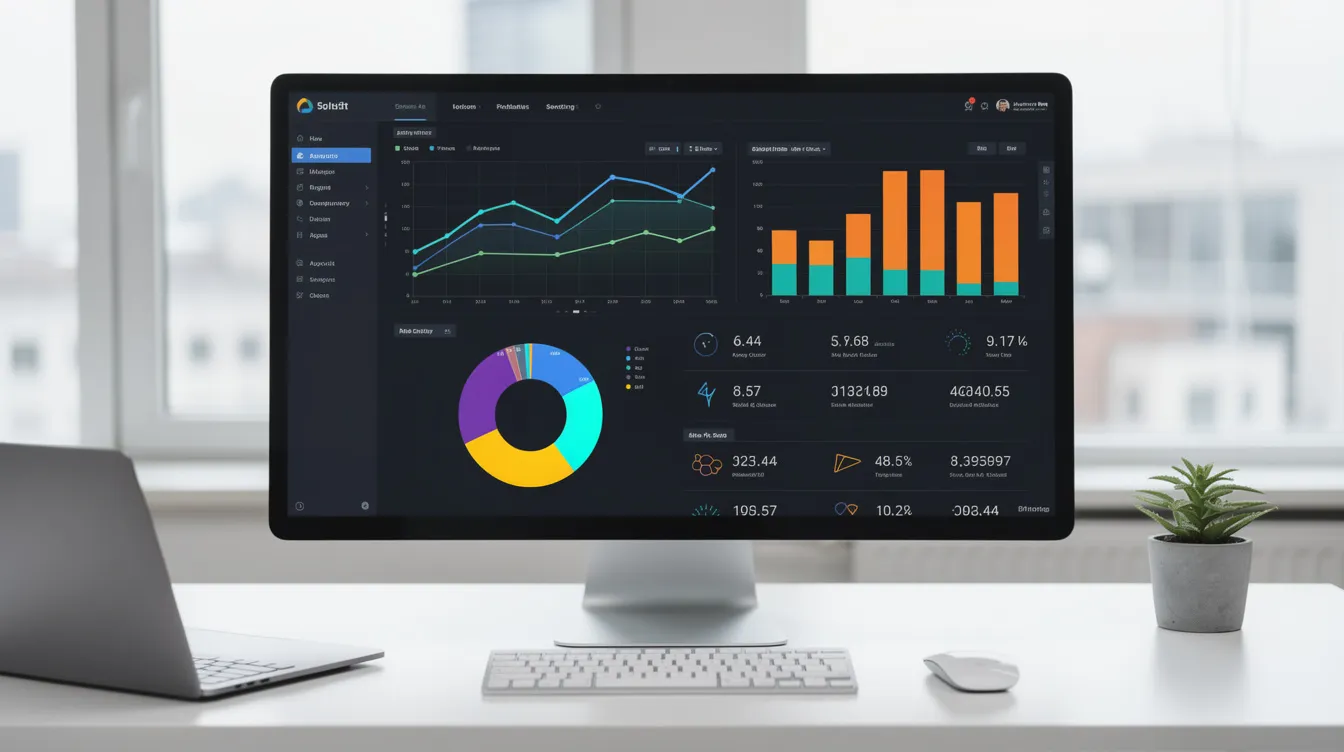
- Combined dashboards – traditional SEO data (traditional rankings, organic sessions) layered with AI visibility signals: AI Overview appearances, citation counts, and referral traffic from AI-powered surfaces
- AI visibility log – we track 25-50 priority queries, snapshot AI Overviews, record which URLs are cited, and monitor changes monthly. AEO audits require consistent tracking for reliable visibility insights.
- Regular reporting – this data feeds into customer success reporting during recurring client meetings through regular check ins, tying AEO work to ROI and client satisfaction
We also monitor bot logs to see which AI crawlers hit which pages and whether any are blocked or returning errors. This ongoing communication between our team and your analytics is what separates a one-time audit from a real AEO program.
11. 30–60–90 Day AEO Roadmap for New Clients
After the audit, we deliver a prioritized roadmap so new clients know exactly what happens and when. No ambiguity. No “we’ll get to it.” Here are the initial steps and key milestones:
Days 0-30:
- Fix blocking technical issues and open AI bot access
- Restructure top 5-10 money pages with answer-first content
- Publish at least one flagship “answer-first” guide
- Run baseline AI visibility snapshots for priority queries
Days 31-60:
- Expand topical clusters and fill content gaps (FAQs, process pages, local variations)
- Add schema to key pages and improve internal linking
- Create dedicated customer onboarding or process content where missing
- Begin training sessions with the client team on AI search concepts
Days 61-90:
- Build authority content: case studies, data-driven posts, original research
- PR and outreach for brand mentions and external validation
- Refine FAQs targeting common AI user questions and support client teams with SEO coaching for startups and in-house marketers
- Fine tune the strategy based on early citation data and customer feedback
We schedule follow up check-ins at 30, 60, and 90 days to assess AI visibility changes and adjust. Research shows AEO interventions can yield approximately 1.82x increase in ChatGPT referral traffic for treated pages compared to untreated ones. Minor improvements can appear within 30-45 days, while stable, defensible AI visibility typically takes 3-6 months – just like traditional SEO, but often with faster initial citation gains to support long term success.
12. How AEO Fits into Your Broader Marketing and CRM Strategy
AEO doesn’t live in a vacuum. It plugs directly into your SEO, PPC, website marketing, and customer experience strategy to drive growth across channels.
Improved content structure benefits ad quality scores, landing page performance, and user experience. The same clarity that gets you cited by AI makes your lead generation sharper. AEO compliance also improves overall content governance, encourages systematic risk assessments of your digital presence, and helps create opportunities for new customers who discover you through AI surfaces first.
We log AEO insights in your CRM so sales and customer success teams see which questions prospects ask AI tools – and can reflect that in their messaging, welcome email sequences, and training materials. This is how you reduce churn and turn AI visibility into a competitive moat.
Ready to have this checklist run on your site? Book a strategy call with The Active Media. We’ll show you exactly where your AI visibility stands, which competitors are being cited instead of you, and what the 90-day roadmap looks like for your business. No fluff. Just method.
FAQ
How Long Does It Take to See Results from AEO Work?
- Minor AI Overview and chat citation improvements can appear within 30-45 days after fixing technical issues and restructuring top pages. We’ve seen sites go from zero citations to multiple AI Overview appearances in under six weeks.
- More stable, defensible AI visibility typically takes 3-6 months, especially in competitive B2B niches. This timeline mirrors traditional SEO but citation improvements often come faster than ranking improvements to support long term success.
- Timelines depend on existing authority, content depth, and how quickly your team can approve and publish changes. The faster we move through the onboarding process together, the sooner you see measurable outcomes.
Do I Need Separate Content for AEO, or Can We Adapt Existing SEO Pages?
- Most AEO wins come from restructuring and enriching existing SEO pages rather than creating entirely new content. We focus on answer-first formatting, clear heading hierarchies, and extractable sections.
- Sometimes new formats like FAQs, checklists, and “how it works” pages are added to fill answer gaps that AI tools prefer. These are low-effort, high-impact additions that create opportunities for citation.
- Our process minimizes disruption by prioritizing high-impact updates first. You won’t need to rebuild your site – just sharpen what’s already there.
How Is AEO Different from a Traditional SEO Audit?
- Traditional SEO audits focus on keywords and backlinks, search results rankings, and technical health. AEO audits measure citation frequency and content reuse by AI – how often and how well AI systems quote your content. 60% of AI Overview citations come from non-top 20 ranked pages, which means traditional rankings alone don’t predict AI visibility.
- AEO looks at section-level extractability, question coverage, and AI bot access – elements often missing from standard SEO audits. We usually run both together to avoid fragmented strategy and to account for how Google’s AI Mode is transforming traditional SEO.
What Access Do You Need to Run This AEO Checklist on My Site?
- Essentials: read-only access to Google Analytics 4 and Search Console, CMS access, and permission to crawl the site with AEO tools. Support tickets or dev access may be needed for technical fixes.
- Optional but helpful: CRM insights (common sales questions), existing keyword or content strategy documents, and any bullet points or notes from your sales team about what prospects ask most.
- All access is governed by the signed engagement letter and standard security practices. We’re directly responsible for handling your data with care.
Is AEO the Same as Authorized Economic Operator (AEO) Certification?
- No. While they share the acronym, an Authorized Economic Operator (AEO) checklist is a structured, self-assessment tool for businesses involved in international trade. The AEO checklist in trade evaluates compliance with global customs and supply chain security standards and is aligned with the World Customs Organization SAFE Framework.
- AEO certification in trade leads to priority processing and reduced inspections at customs, AEO status can unlock financial benefits like deferred duty payments, and AEO status qualifies businesses for Mutual Recognition Agreements simplifying cross-border trade.
- The AEO we focus on – Answer Engine Optimization – is entirely about digital search visibility. Both are recognized programs in their respective fields, but if you’re here for AI search, you’re in the right place.