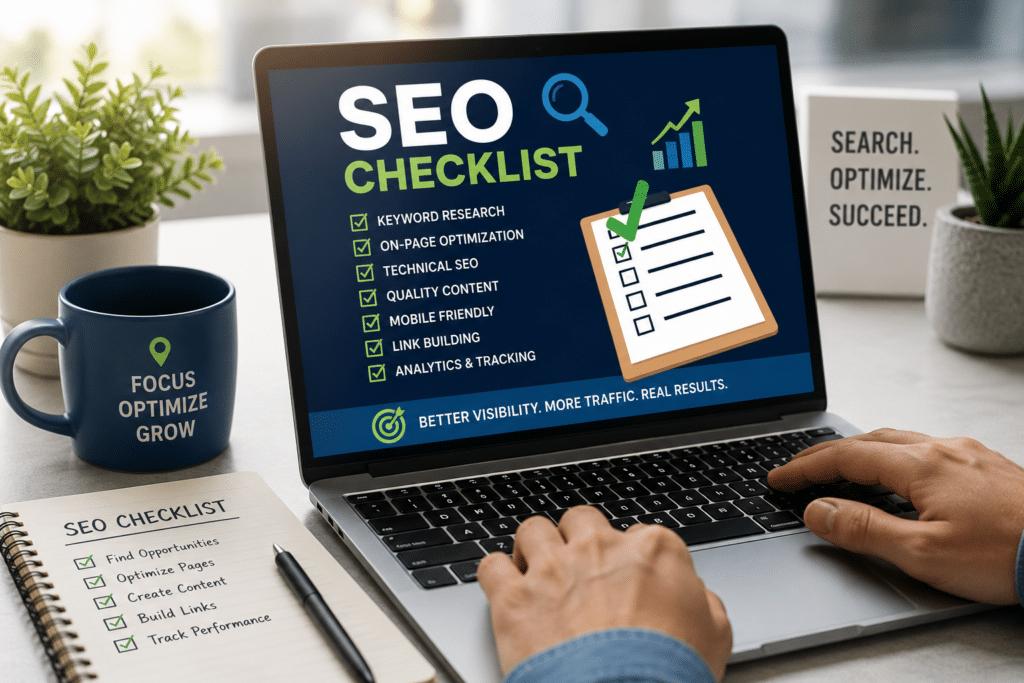

Local SEO for small businesses is the practice of optimizing your online presence so your business appears when nearby customers search for the products or services you offer. When someone types “plumber near me” or “best tacos in [city name],” local search engine optimization determines whether your business shows up-or gets buried beneath competitors.
This guide covers everything small business owners need to implement effective local SEO strategies: from setting up and optimizing your Google Business Profile to building citations, earning reviews, tracking measurable results, and knowing what to look for when hiring a transparent local SEO provider. Whether you run a storefront, a service-area business, or both, this guide is built for owners who want more local customers walking through the door and calling on the phone-without wasting money on tactics that can’t prove their value.
Here’s the direct answer: local SEO helps small businesses appear in Google Maps, local search results, and “near me” searches to capture ready-to-buy customers in your area. With 97% of users searching online to find a local business and 46% of Google searches targeting local businesses or services, the opportunity is enormous-and measurable.
By the end of this guide, you’ll understand how to:
- Increase phone calls, foot traffic, and online leads from local customers
- Set up tracking systems that prove real ROI from your local SEO efforts
- Build a competitive advantage against larger businesses in your local market
- Evaluate whether a local SEO provider is delivering transparent, results-driven work
- Prepare your business for emerging trends like voice search and AI-powered discovery
Understanding Local SEO Fundamentals
Local search engine optimization targets customers within specific geographic boundaries-the people most likely to visit your location, call your business, or request your services. Unlike broad digital marketing, local SEO focuses on making sure your business appears when someone nearby is actively looking for what you offer.
For local businesses, this matters because proximity drives conversion. 50% of local searches result in a store visit within a day. That means the person searching “auto repair near me” on their phone at 2 PM may be sitting in your waiting room by 3 PM-if your local SEO presence is strong enough to surface your business first.
Local SEO vs Traditional SEO
Traditional SEO focuses on ranking nationally or globally, optimizing for broad keyword reach, domain authority, and content relevance across wide audiences. A national e-commerce brand, for example, wants to rank for “running shoes” regardless of where the searcher is located.
Local SEO adds critical geographic signals. Your physical location, proximity to the searcher, local reviews, Google Business Profile optimization, and citation consistency all become primary ranking factors. While traditional SEO might prioritize backlinks and site architecture above all else, local SEO demands that your business information is accurate, your reputation is strong, and your digital footprint matches what search engines expect for a real, trustworthy local operation.
Key Local Ranking Factors
Google prioritizes three core signals for local search results: relevance, distance, and prominence. According to Whitespark’s 2026 Local Search Ranking Factors survey-the most comprehensive expert-informed research available-these three factors remain central to Local Pack and Google Maps rankings.
- Relevance measures how well your business matches what the searcher is looking for. Your categories, business name, service titles, and website content all feed this signal.
- Distance is the physical proximity between the searcher and your business location. You can’t change where you are, but you can optimize how well search engines understand your service area.
- Prominence reflects how well-known and trusted your business is. Review count, backlinks, local authority, and online visibility all contribute.
One notable finding from the Whitespark survey: whether your business is open at the moment of search emerged as the 5th most influential factor for Local Pack rankings. Keeping your hours accurate and up-to-date isn’t just good customer service-it directly impacts your local search ranking.
The Local Search Landscape
The numbers paint a clear picture of why local SEO is important for small businesses:
- 84% of US consumers have searched for a local business online in the past three months
- 82% of people use their phones for “near me” searches
- 73% of local searches begin on mobile devices, with only about 19% starting on desktop
- Google Search remains the dominant starting point: 52% of most local searches happen there, with 9% beginning in Google Maps
- Around 75% of consumers use more than one channel during a single local business search-moving between Google Search, Maps, review sites, social media, and AI tools
These trends confirm that mobile optimization isn’t optional, Google Business Profile is essential, and your business information needs to be consistent everywhere customers might find you. Understanding this landscape directly informs which strategies deliver the highest return.
Essential Local SEO Strategies for Small Businesses
Effective local SEO strategies generate measurable results: more phone calls, more direction requests, more customers walking through your door. Here are the foundational tactics every small business needs in place.
Google Business Profile Optimization
Claiming your Google Business Profile is essential for local SEO-it’s the single most important step you can take. A complete Google Business Profile can improve local rankings significantly, and businesses with verified Google Business Profiles attract more customers than those without one.
Optimizing your Google Business Profile increases local search visibility across both Google Search and Google Maps. Here’s what a fully optimized profile includes:
- Accurate business name, address and phone number matching exactly what appears on your website
- Primary and secondary categories that precisely describe your services
- Complete service listings with keyword-rich service titles (GBP’s predefined services are now heavily weighted in ranking algorithms)
- Current business hours, including special hours for holidays-remember, “open now” is a top-5 ranking factor
- High-quality photos and videos updated regularly
- Google Business Profile posts sharing updates, offers, and local events
- Attributes relevant to your business (wheelchair accessible, veteran-owned, etc.)
Regularly updating your Google Business Profile enhances customer engagement and signals to search engines that your business is active and relevant. For storefronts, keeping your address visible is critical-hiding it can shrink your ranking radius.
Local Keyword Research and Implementation
Using local keywords can increase visibility in local searches dramatically. Local keywords should include city or neighborhood names combined with your services: “emergency dentist in Midtown,” “AC repair Austin,” “family attorney [neighborhood name].”
Long-tail and conversational keywords are especially important for voice search, since 82% of people use their phones for “near me” searches and voice queries tend to be more conversational: “Where’s the nearest pizza place that’s open right now?”
On-page implementation matters. Include location specific keywords in:
- Title tags and H1 headings
- Meta descriptions
- Website content throughout service and location pages
- FAQ sections answering questions your local audience actually asks
Creating dedicated pages for each service area improves local SEO performance, whether you’re targeting a single market like St. George, Utah with localized SEO services or multiple cities. If you serve multiple neighborhoods or cities, each deserves its own page with relevant keywords and localized content rather than a generic “areas we serve” list, a best practice that’s especially important when optimizing a legal website for local search.
Citation Building and NAP Consistency
Your name address and phone number (NAP) must be identical everywhere it appears online. Consistent NAP citations build trust with search engines-and inconsistencies actively damage your credibility.
Local citations fall into two categories:
- Structured citations: listings in business directories, local directories, and industry-specific platforms (Yelp, Yellow Pages, Angi, your local chamber of commerce directory)
- Unstructured citations: mentions on local news sites, blogs, community websites, and other websites where your business information appears
Citation cleanup-removing duplicates and correcting inaccurate directory listings-is one of the highest-ROI activities in local SEO. A roofing contractor in Houston moved from Page 5 to Page 1 in local search results within 90 days after a thorough GBP audit and citation cleanup, with call volume doubling during that period.
Review Management and Reputation Building
Online reviews are a direct ranking factor for local SEO. Positive reviews increase a business’s prominence in local search results, and businesses with more positive reviews rank higher in local searches.
But it’s not just quantity. The Whitespark survey found that review recency, review velocity (how fast new reviews come in), and even photos included in reviews carry increasing weight. Your review management strategy should include:
- Actively asking satisfied customers to leave reviews-make it easy with direct links
- Responding to every review, positive and negative, quickly and professionally
- Monitoring review sentiment across platforms, not just Google
The results can be dramatic: a restaurant in LA increased weekend reservations from approximately 40 to 120 per weekend in just 60 days, with review count growing by 2,733% and revenue climbing roughly 73%.
These four strategies-GBP optimization, local keyword implementation, citation building, and review management-form the foundation of every successful local SEO campaign. Together, they address all three core ranking factors: relevance, distance, and prominence. For businesses ready to scale their efforts further, the next section covers advanced techniques and the measurement systems that prove these tactics are working.
Advanced Local SEO Implementation and Measurement
Once your foundational local SEO strategies are in place, advanced tactics and proper measurement frameworks separate businesses that grow steadily from those that plateau. More importantly, transparent tracking is what allows you-or any provider you hire-to demonstrate tangible business results, not just vanity metrics.
Local Content Marketing Strategy
Creating location-based content can enhance local authority and signal to search engines that your business is genuinely embedded in the local community. Localized content creation indicates community involvement to search engines in ways that generic service pages never can.
Effective local content includes and complements essential SEO services for small businesses:
- Neighborhood guides relevant to your industry (“Best parks near our veterinary clinic in Riverside”)
- Local events coverage and community event write-ups that resonate with your local audience
- FAQ content addressing the questions your target audience actually asks (“When is the best time to get your roof inspected in Houston?”)
- Case studies and customer stories from your local area
Publishing locally relevant content can attract visitors and backlinks simultaneously. Building quality local backlinks improves local SEO rankings, and local backlinks from high authority sites boost online visibility considerably. Partnering with local organizations can yield valuable backlinks-sponsoring a charity run, guest posting in local press, or collaborating with your local chamber all create natural link opportunities.
Mobile-friendly websites are crucial for local SEO rankings. With 73% of local searches starting on mobile devices, every piece of content must render properly on phones and tablets. Page speed, responsive design, and click-to-call functionality are non-negotiable mobile optimization tips that directly affect both user experience and search engine rankings.
A party rental business in Austin implemented a seasonal content strategy alongside year-round GBP management and saw a 40% year-over-year revenue increase in Q1 2026 versus Q1 2025-going from scrambling for bookings to being fully booked in advance.
Tracking and Measuring Local SEO Success
Without proper tracking, you can’t connect local SEO efforts to revenue. And if you can’t prove ROI, you can’t make informed decisions about where to invest. Here’s how to set up transparent measurement:
- Set up Google Analytics 4 with local conversion tracking-configure goals for form fills, direction requests, and phone clicks so you can track which pages and channels drive real leads
- Configure Google Business Profile insights monitoring-track search vs. map views, the queries bringing up your profile, and actions customers take (calls, direction requests, website visits)
- Implement call tracking for phone lead attribution-this is critical for most business owners, since phone calls are often the primary conversion for local services and can’t be tracked without dedicated tools
- Establish local keyword ranking monitoring-use Google Search Console as a free tool to monitor how your site performs in organic search results, and supplement with rank tracking tools that show local rankings by zip code or neighborhood radius
To track SEO effectiveness, use tools like Google Analytics and Search Console together to build a complete picture of how local traffic converts into actual business, and to inform broader SEO strategy for small businesses.
A Pensacola laundromat exemplifies what transparent measurement looks like: revenue jumped from approximately $14,700/month to $26,000/month in six months, delivering an 11.3× ROI. Their optimized GBP service descriptions alone outperformed roughly 80% of the competition.
Choosing a Local SEO Service Provider
Most business owners reach a point where managing local SEO alongside running a business becomes unsustainable, which is where working with an experienced SEO coach for growing businesses can be especially valuable. Small businesses typically operate with limited marketing budgets, which makes choosing the right provider even more critical-you can’t afford to waste money on someone who won’t show you real results.
Local SEO can generate an ROI of 500% or more-40% of local SEO campaigns hit that benchmark, especially when it’s part of a structured, ongoing SEO plan tailored to your business. But only if you’re working with a provider who tracks and reports on the metrics that actually matter to your business.
Here’s how to evaluate whether a provider is transparent or waving red flags:
| Evaluation Criteria | Transparent Provider | Red Flag Provider |
|---|---|---|
| Reporting | Detailed monthly reports with call tracking and lead attribution | Vague traffic reports without conversion data |
| Communication | Regular check-ins with clear progress explanations | Limited contact and unclear progress updates |
| Pricing Structure | Clear pricing with defined deliverables | Hidden fees and unclear service boundaries |
| A provider worth hiring will show you exactly how many phone calls, form submissions, and direction requests your local SEO campaign generated. They’ll track website traffic alongside conversion data so you can see not just that people found you, but that they became customers. They’ll also stay current with ranking factor research and emerging trends-like AI search visibility data showing that only 1–11% of business locations currently surface in AI tool recommendations. |
Avoid any provider who promises instant #1 rankings, uses spammy citation tactics, or generates unnatural online reviews. These approaches risk GBP suspension and long-term damage to your local SEO presence.
Common Local SEO Challenges and Solutions
Even with a solid strategy, small businesses face real obstacles when implementing local SEO. Here are the most common challenges and practical solutions.
Limited Budget and Resources
Small businesses typically operate with limited marketing budgets, but the highest-impact local SEO activities are also the lowest cost, especially when paired with professional SEO services that prioritize ROI. Google Business Profile optimization is free. Auditing your NAP consistency across online directories requires time but no ad spend. Asking happy customers to leave reviews costs nothing.
Prioritize in this order: claim and fully optimize your business profile, clean up your local listings, build a review generation habit, then layer in content and local backlinks as resources allow. Many of the case studies referenced in this guide-the Houston roofer, the Austin party rental company-achieved 2× or greater revenue growth in 3–6 months primarily through these foundational tactics.
Measuring ROI and Attribution
Without call tracking and conversion goal setup, local SEO results can’t be tied to revenue. This is where most business owners get frustrated-they know something is working, but can’t prove it.
The solution: implement call tracking from day one, tag every form on your website, configure Google Analytics for local conversion events, and track transactions or booked appointments. If you’re working with a provider, demand this level of reporting, particularly if you’ve engaged specialized SEO services for law firms. If they can’t show you how many calls came from your local SEO efforts last month, they aren’t measuring what matters.
Competing Against Larger Businesses
Small businesses can compete with larger brands through local relevance. Big chains may have larger marketing budgets, but they rarely match a local business’s community ties, review authenticity, or hyper-local content. Small businesses often rely on being the most relevant local result-and that’s an advantage you can build.
Focus on creating dedicated pages for each service area, engage with your local community through partnerships and sponsorships, maintain a fresher and more detailed GBP than your competitors, and build a review profile that reflects genuine customer relationships while understanding how the four main types of SEO work together to support your visibility. These are signals that potential customers and search engines both trust.
Keeping Up with Algorithm Changes
Search is evolving fast. “Open now” signals, review photo weighting, AI-powered search results, voice search through mobile devices-what works in local SEO shifts regularly. Local search engine optimization is an ongoing process, not a one-time project.
This is precisely where working with a knowledgeable, transparent provider pays for itself. A good provider monitors sources like the Whitespark Local Search Ranking Factors report, industry publications, and algorithm updates so you don’t have to. They communicate changes clearly, adjust strategy proactively, and ensure your business adapts rather than falls behind. The investment in professional guidance protects the local SEO results you’ve already built while positioning you for sustainable growth.
Conclusion and Next Steps
Local SEO drives tangible business growth for small businesses-increased phone calls, more foot traffic, stronger online leads, and measurable revenue gains. With 46% of Google searches targeting local businesses or services, the customers are already looking. The question is whether your business appears when they search.
Start with these immediate action steps:
- Claim and fully optimize your Google Business Profile-this single action improves your local search visibility more than almost anything else
- Audit your current online presence-check that your name, address and phone number are consistent across all local directories and online directories
- Set up tracking systems-configure Google Analytics, Google Search Console, and call tracking so every lead can be attributed to your local SEO efforts
- Establish a review generation process-make it simple for customers to leave reviews and respond to every one you receive
- Evaluate whether a local SEO provider can accelerate your results-look for transparent reporting, clear deliverables, and a focus on business outcomes over vanity metrics
The small businesses seeing the strongest local SEO results-500%+ ROI, doubled call volume, 40–73% revenue increases-share one thing in common: they invested in strategies they could measure and worked with providers who proved their value through data, not promises.
For continued growth, explore related topics like reputation management across review platforms, local paid advertising to supplement organic efforts, and multi-location SEO strategies if you’re planning to expand your service area.
Additional Resources
- Google Business Profile optimization checklist: Verify your profile, complete every field, add 10+ high-quality photos, set accurate hours including special hours, add all relevant services with descriptive titles, enable messaging, and post weekly updates
- Local SEO audit template for self-assessment: Check NAP consistency across your top 20 directory listings, verify your website includes location specific keywords in title tags and meta descriptions, confirm mobile responsiveness, review your current Google Business Profile completeness score, and catalog your existing online reviews across platforms
- Recommended tools for tracking local search performance: Google Analytics 4 (free tool for website traffic and conversion tracking), Google Search Console (free tool for search performance data), Google Business Profile Insights (built-in analytics for your business profile), and dedicated call tracking platforms for phone lead attribution