Your website isn’t a digital brochure collecting dust in some forgotten corner of the internet. It’s your most valuable sales asset-a machine that should be generating leads, closing deals, and building authority around the clock. If it’s not doing that, you’ve got a very expensive problem sitting on a very cheap server.
This guide breaks down every moving part of a website marketing strategy that actually works in 2026-from search engine optimization to email campaigns to paid traffic-and shows you exactly how to wire them together so your site stops being a placeholder and starts being a growth engine.
Key Takeaways
- Website marketing uses your site as the central hub of your digital marketing strategy, pulling in visitors from organic search, social media, email, and paid ads-then converting them into leads or customers.
- In 2026, 53% of all website traffic comes from organic search, making SEO and content marketing foundational, but website marketing is equally about optimizing the customer journey once visitors arrive.
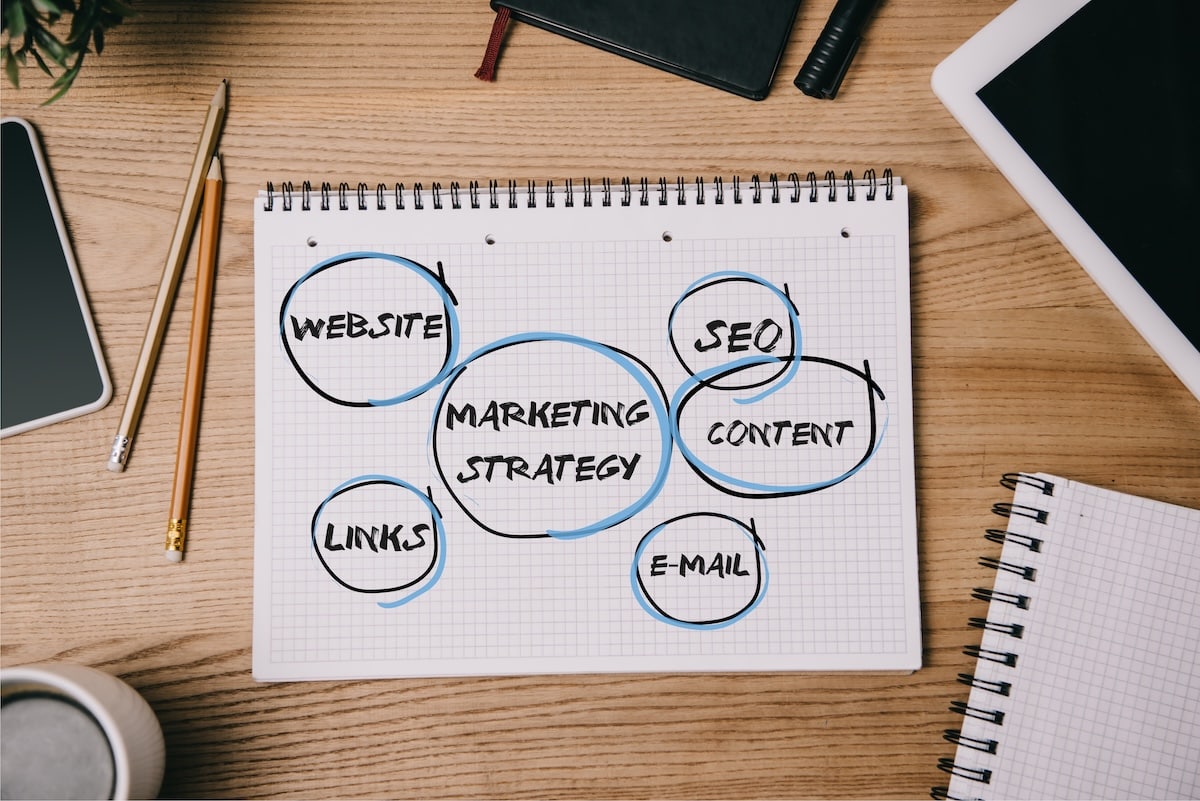
- A strong marketing strategy combines search engine optimization, content marketing, email marketing, paid media, and conversion-focused landing pages rather than betting everything on a single channel.
- Mapping and improving the on-site customer journey-from first click to checkout or lead form-is just as important as driving more traffic to your pages.
- Ongoing measurement using analytics tools, heatmaps, and A/B tests is essential to improve ROI from all website marketing efforts over time.
What Is Website Marketing?
Website marketing is the practice of using your website as the central asset in your digital marketing strategy to attract, educate, and convert visitors. It’s not just about having a pretty homepage. It’s about deliberately building a system where every channel-search engines, social media marketing, email campaigns, paid ads, influencer marketing-sends users back to key landing pages on your site where real business happens.
Here’s where it fits in the bigger picture: digital marketing covers everything from mobile apps to SMS to streaming TV ads. Internet marketing narrows that to activities on the open web. Website marketing goes a step further-it makes the site itself the conversion engine that everything else feeds into. All your other digital marketing channels exist to drive traffic coming back to a place you own and control.
Effective website marketing blends three layers: strategy (defining your target audience and positioning), execution (channels and website content), and optimization (testing and analytics). A local plumber in Chicago needs strong local SEO and a Google Business Profile. A SaaS startup needs pillar content and demo landing pages. An ecommerce store needs product pages optimized for shopping ads and influencer traffic. Different playbooks, same core principle: your site is the hub.

The Benefits of a Strong Website Marketing Strategy
The real benefits of web marketing aren’t measured in pageviews-they’re measured in revenue, qualified leads, and brand authority. Over 32% of people use search engines to find new brands, and if your site appears when they’re actively searching, you’re capturing demand at scale without paying per click.
An optimized website reduces acquisition cost over time. Organic traffic compounds-a blog post published today can generate leads for years. Email list growth works the same way. Every subscriber you capture through content marketing is someone you can reach repeatedly at near-zero marginal cost. Conversion rate optimization maximizes the value of existing traffic, so you don’t need to double your budget to double results.
Content on your site builds trust. Case studies, detailed guides, and reviews establish expertise that potential customers need before they’ll hand over a credit card or book a call. And unlike third-party platforms where you’re subject to algorithm changes and interface constraints, your site gives you full control over the customer journey-navigation, CTAs, pricing transparency, everything. Analytics enable data-driven refinements to marketing strategies, so you can attribute results to specific channels and double down on what’s working.
Website Marketing vs. Digital Marketing vs. Internet Marketing
These terms get thrown around interchangeably, but they’re not the same thing. Here’s the cleanest way to think about it:
| Website Marketing | Internet Marketing | Digital Marketing | |
|---|---|---|---|
| Scope | Your website as the central marketing tool | All marketing on the open web | All marketing via any digital channel |
| Main Channels | SEO, content, email, paid ads → landing pages | Search, display, social, email, affiliate | Includes apps, SMS, podcasts, streaming, OTT |
| Primary Goals | Conversions, leads, sales on your site | Reach + awareness + conversion | Acquisition, retention, loyalty, service |
Website marketing is the most focused of the three. Online marketing and internet marketing cast wider nets, but if your site can’t convert, none of that reach matters.
Your Website as the Hub of the Customer Journey
The marketing funnel-awareness, consideration, decision-isn’t just a textbook concept. It’s the blueprint your site needs to follow. A well-structured website can guide users through the marketing funnel from “who are you?” to “take my money” if you design it intentionally.
Typical user paths look like this: someone discovers your blog content via Google, reads a comparison page, leaves, returns a week later via an email link, checks pricing, then converts after clicking a retargeting ad. The buyer’s journey is non-linear, messy, and multi-touch. Your site needs to support every stage with the right content-educational articles for awareness, case studies and FAQs for consideration, and tailored landing pages for decision.
On-site elements matter enormously here. Navigation should reflect real user needs, not your org chart. Internal linking should move people from blog posts to product pages naturally. Clear calls-to-action guide visitors towards desired actions at every step. And you need to track key touchpoints with analytics and CRM integration to understand which marketing efforts actually drive each conversion.
Core Website Marketing Channels That Drive Traffic
Traffic sources fall into two buckets: organic (earned) and paid (bought). Effective strategies mix both-relying on a single channel is like racing on one tire.
The main channels to build around:
- SEO – targeting users actively searching for solutions
- Content marketing – blog posts, guides, tools that feed SEO and build trust
- Email marketing – nurturing subscribers and driving repeat visits
- PPC campaigns and shopping ads – immediate, targeted visibility
- Social media – awareness, community, and distribution
- Influencer marketing – tapping established audiences
- Referral/backlink strategies – earning authority from other sites
The goal isn’t to use every channel-it’s to choose 3–5 primary ones aligned with your audience and budget. B2B SaaS leans on SEO and LinkedIn. Ecommerce leans on shopping ads and Instagram. Small businesses might start with local SEO, Google Business Profile, and email. Pick your lanes, dominate them, then expand.

Search Engine Optimization (SEO) for Website Marketing
Search engine optimization SEO is the foundation of most website marketing strategies because it targets people who are already looking for what you sell. 53% of all website traffic comes from organic search, and pages ranking first in SERPs receive over 50% of traffic. The average click-through rate for the top search result is 27%-while the average click-through rate for organic search overall is about 3%.
SEO combines keyword research, technical optimization, and content marketing to increase visibility in search results. It supports every stage of the customer journey with different keyword types: informational queries for awareness, commercial terms for consideration, and transactional searches for decision. SEO can take three to six months to show results on less competitive terms, and 6–12+ months for high-competition keywords depending on domain strength. SEO requires ongoing optimization to maintain rankings-it’s not a one-and-done project.
Keyword Research: Finding What Your Customers Actually Search
Keyword research is essential for effective SEO strategies. Start by brainstorming core topics based on your company’s products, services, and customer pain points. Then expand using tools like Google Keyword Planner, Ahrefs, Semrush, or Moz to find search volume, difficulty, and intent signals.
Long-tail keywords are gold for small businesses and mid-sized sites. Compare “SEO services” (brutal competition, vague intent) with “affordable SEO services for local dentists in Chicago” (lower competition, crystal-clear intent, higher conversion rates). Map each keyword to a specific page or landing page rather than stuffing many terms into one page. This keeps your content focused and your search results page positioning clean.
On-Page SEO: Structuring Pages to Rank and Convert
On-page optimization includes integrating relevant keywords into titles and meta descriptions, proper H1/H2/H3 heading hierarchy, readable URLs, and descriptive image alt text. Content structure should be clear for AI-powered search optimization-think logical headings, concise paragraphs, and direct answers to user questions.
User experience focuses on fast loading times and mobile-friendly design-Google cares about these signals deeply. Internal linking guides users to related content, supports the user journey, and distributes page authority. Every SEO page should have a clear next step: lead form, demo request, add-to-cart button, or email sign-up. Optimizing content for rankings without a conversion path is leaving money on the track.
Off-Page SEO: Earning Trust and Authority
High-quality backlinks are important for search engine authority-they act as votes of confidence from other sites. Ethical link-building approaches include guest posts, digital PR, data-driven studies, and creating resources others genuinely want to cite.
Stay far away from link farms or paid links from irrelevant directories. Those tactics can tank your rankings faster than they built them. Periodically audit your backlink profile using SEO tools and disavow toxic links. Secondary off-page signals-brand mentions, reviews, social sharing-also contribute indirectly to how search engines perceive your trustworthiness.

Content Marketing: Turn Your Site Into a Resource Library
Content marketing is about publishing content that’s genuinely valuable-articles, guides, tools, videos-on your own site to attract and nurture visitors. Content marketing is essential for building brand authority, and it feeds SEO by targeting the questions your audience types into Google every day.
Blog posts and how-to articles answer early-stage questions. Deeper content like case studies, whitepapers, and webinars support mid- and bottom-of-funnel decision-making. The beauty is repurposing: a single in-depth guide can be sliced into social media posts, email campaigns, short videos, and infographics. High-quality content can significantly improve user engagement and conversion rates across every channel it touches.
Plan with a simple content calendar-monthly themes, weekly articles, accompanying social snippets. Content marketing helps attract and retain customers effectively when it’s consistent, not sporadic.
Educational Blog Posts and Pillar Pages
Educational blog posts can significantly drive traffic to your website when they answer specific, search-led questions using your audience’s own language. Build pillar pages-one comprehensive resource on a broad topic linking to cluster articles covering subtopics in depth. This improves both SEO and UX.
Example topics by industry:
- B2B SaaS: “How to reduce customer churn through product onboarding”
- Ecommerce: “2026 summer fashion sustainability guide”
- Local services: “Plumbing fixes every homeowner should know”
Each post should lead to a relevant next step-newsletter sign-up, downloadable guide, product page, or consultation booking. Use blog content to address objections, pricing questions, and implementation concerns. Creating high-quality content establishes authority and encourages repeat visits. Consistent high-quality content builds authority and ranks in search engines over time.
High-Value Lead Magnets and Downloadable Resources
Lead magnets-checklists, templates, calculators, eBooks-give visitors something valuable in exchange for their email address. Implementing lead capture forms converts visitors into leads and anchors your email nurturing sequences.
These assets should solve a specific, high-priority problem-not just be generic brochures nobody reads. Examples: “2026 Small Business Digital Marketing Checklist” or “ROI Calculator for PPC Campaigns.” Place them on strategic landing pages and promote via SEO, social ads, and email campaigns. Each lead magnet is the start of a relationship, not the end.
Email Marketing and Email Campaigns That Support Your Website
Email marketing yields a higher return on investment than social platforms, making it one of the most powerful marketing channels in your arsenal. Email marketing drives conversions effectively according to HubSpot, and unlike social media platforms where algorithms throttle your reach, email marketing allows direct communication with interested customers.
The relationship is symbiotic: your site captures subscribers through newsletter sign-up forms, content downloads, and exit-intent pop-ups. Marketing emails bring them back to landing pages, new content, and offers. Building an email list facilitates communication and encourages returns-every subscriber is a future conversion waiting to happen.
Segment subscribers by behavior-pages visited, content downloaded, past purchases-and personalize accordingly. Track open rates, click-through rates, conversion rates, and unsubscribe rates. A well-structured email strategy keeps your brand top of mind between site visits.
Types of Email Campaigns That Drive Conversions
Email campaigns can nurture relationships over time with consistent messaging. Key campaign types:
- Welcome series (3–5 emails over 7–10 days): introduce your brand, share top content, offer a clear next step
- Educational drip sequences: build trust, answer objections
- Product launch campaigns: build anticipation with features and testimonials
- Cart/form abandonment reminders: recover lost conversions with incentives
- Re-engagement emails: win back inactive subscribers
Email marketing strengthens customer relationships and encourages repeat business. Align each campaign with specific landing pages designed for that audience and goal. A/B test subject lines, send times, and CTAs relentlessly. And stay compliant-GDPR, CAN-SPAM require consent, unsubscribe links, and transparent data handling.

Social Media and Influencer Marketing as Website Traffic Engines
Social media marketing drives traffic to a website-but it’s a distribution and engagement channel, not a replacement for your site. Social media supplements organic growth and reaches larger audiences when used strategically. Engaging in social media marketing builds brand awareness and community through organic posts, stories, and short videos.
Social media platforms allow businesses to share updates and engage users directly. Paid social ads on Meta, LinkedIn, TikTok, and X can scale reach to specific demographics with precision. Paid social ads can retarget past visitors to drive traffic back to your conversion pages. Tactics like linking to blog content, using “link in bio” tools, and tagging products that click through to your site keep social platforms working as feeders, not endpoints.
Consistency and brand voice across social platforms support your overall marketing strategy-fragmented messaging kills trust.
Influencer Marketing and Partnerships
Influencer marketing can amplify brand messages to new audiences, especially when you work with niche and local creators who genuinely resonate with their communities. Influencer recommendations can drive targeted traffic that converts at higher rates than cold audiences. Collaborating with industry partners can reach new audiences you’d never access through your own channels alone.
Collaboration formats include sponsored posts, review articles linking to your landing pages, affiliate offers, and co-branded webinars. Choose influencers based on audience fit, engagement rates, authenticity, and alignment with your brand values. Track performance via UTM links, discount codes, or custom landing pages. Long-term partnerships build sustained awareness-one-off posts rarely move the needle.
Paid Traffic: PPC, Shopping Ads, and Retargeting
Utilizing paid ads provides immediate visibility while SEO and content marketing ramp up. PPC ads drive traffic quickly but require substantial investment-they’re the turbo boost, not the engine. Paid ads can target users at the bottom of the funnel who are ready to buy.
Key platforms include Google Ads search campaigns for high intent traffic, Google Shopping for ecommerce (shopping ads show product images and prices during searches), and retargeting via display or social ads for consideration-stage visitors. Pay per click campaigns align with the sales funnel: search ads for transactional intent, display retargeting for consideration, offer-based campaigns for decision.
Simple math: If your cost-per-click is $2, conversion rate is 3%, and average customer value is $100, then 100 clicks cost $200, produce ~3 customers, generate $300 revenue-net $100. Use CPA vs lifetime value to guide budget allocation. Always pair paid campaigns with tightly matched landing pages, not your homepage.
Best Practices for Conversion-Focused Landing Pages
Campaign-specific landing pages outperform generic pages by matching intent and messaging from the ad or email. Key elements:
- Focused headline matching the traffic source
- Benefit-driven copy centered on the customer’s problem
- Social proof (reviews, stats, logos)
- Minimal distractions-one primary CTA
- Forms with only essential fields, clear privacy messaging, trust badges
Use A/B testing to optimize headlines, imagery, button text, and form length. Example landing page goals: booking a 30-minute strategy call, starting a free trial, or downloading a 2026 industry report. Mobile optimization is non-negotiable-most of your traffic coming from digital ads hits these pages on phones.
Designing and Optimizing the On-Site Customer Journey
Many sites lose potential customers not because of lack of traffic but because the path to action is confusing or too long. Map click journeys from entry points (blog posts, homepage, digital ads) to key goals (purchase, demo, contact, signup).
Common pitfalls include dead-end pages, multiple competing CTAs, hidden pricing, and complex checkouts. Fix them by simplifying navigation, adding contextual CTAs, and using breadcrumbs. Use heatmaps, session recordings, and funnel reports to identify where people drop off. User experience focuses on fast loading times and mobile-friendly design at every step of the user engagement path.
Personalization and Smart Recommendations
Modern tools use behavior data-pages viewed, items in cart, geolocation-to personalize content, product recommendations, and offers. Examples: showing returning visitors relevant content, surfacing “recently viewed” products, or offering a discount on the pricing page.
Virtual agents can provide instant assistance to users navigating complex sites. Personalization should feel helpful, not intrusive-avoid overusing pop-ups. Respect privacy with transparent cookie banners and preference centers. Even light personalization like dynamic headlines by industry or location can significantly improve engagement and conversion rates.
Case Studies and Social Proof on Your Website
Social proof is particularly powerful at the consideration and decision stages. Detailed case studies showing before/after results, metrics, timelines, and client quotes do more selling than any ad copy. Over 50% of traffic comes from organic search results-make sure the pages these visitors land on feature testimonials, star ratings, and logos of recognizable customers.
Use multiple formats: written stories, short video testimonials, and data snapshots for different decision-makers. Every case study page needs a clear next step-“Book a strategy session” or “See how this works for your business.”
Technical Foundations: Speed, Mobile, and Core Web Vitals
Even the best content fails if your site is slow or broken on mobile devices. Mobile search accounted for 64% of organic traffic in early measurements, and that number has only grown. Google indexes mobile versions first-mobile friendly design isn’t optional.
Core Web Vitals measure loading speed, interactivity, and visual stability. High-impact optimizations: image compression (WebP/AVIF), lazy loading, CDN delivery, minifying CSS/JS, and reliable hosting. Audit regularly with Google PageSpeed Insights, Lighthouse, or WebPageTest. Pages ranking in the first SERP position get over 50% of traffic-but only if they load fast enough for users to stay.
Analytics: Measuring ROI of Your Website Marketing Efforts
What gets measured gets improved. Using Google Analytics can help track website performance effectively-set up events, conversions, and custom reports tied to your actual goals: leads, sales, sign-ups. Campaign performance tracking is non-negotiable for website marketing success.
Define core KPIs: organic sessions, conversion rate, cost per lead, average order value, customer lifetime value. Interpret attribution reports to understand the combined impact of SEO, email marketing campaigns, social, and paid strategies on conversions. Review monthly or quarterly-identify winning strategies, underperforming landing pages, and content gaps. Free tools like Google Analytics 4 and Google Search Console give you more data than most businesses ever act on.
Step-by-Step: Building a Website Marketing Strategy in 2026
Think of this as your practical roadmap. High-level steps: define your audience, set goals, audit your current site and traffic, choose core marketing campaigns, create a content plan, and set up measurement. Start small-1–2 personas, a few key offers-before expanding.
Strategy is iterative: plan, execute, measure, refine every quarter. A small business might split budget 50% to content/SEO, 30% to email tools, 20% to online advertising. An online business focused on ecommerce might front-load paid search for immediate sales while building organic traffic in parallel.
Defining Your Audience and Value Proposition
Create customer profiles based on specific demographics, job roles, problems, and goals. Your value proposition should answer three questions: who you help, what you help them achieve, and why your approach is different.
Interview recent customers or run surveys to validate assumptions about pain points. Align website messaging-headlines, product descriptions, case studies-with these insights. Clear positioning underpins every effective digital marketing strategy, from SEO content topics to ad angles. If your messaging doesn’t genuinely resonate with your audience, nothing else in this article matters.
Setting Measurable Goals and Choosing Tactics
Translate business objectives into SMART goals-e.g., “increase qualified demo requests by 30% in Q4 2026.” Goals dictate tactics: awareness campaigns lean on content marketing and social, while lead generation focuses on SEO, landing pages, and email campaigns.
Choose a small set of primary tactics for the first 90 days with specific metrics tied to each. Create a one-page marketing plan summarizing goals, target audience, digital channels, and monthly activities. Account for both short-term wins via paid strategies or email and long-term compounding from SEO and publishing content consistently.
Working With Website Marketing Services and Agencies
Many businesses lack in-house expertise for advanced SEO, complex PPC campaigns, or conversion optimization at scale. Common agency services include SEO audits, content strategy, copywriting, paid media management, CRO, and email automation.
Hire help when growth stalls, internal resources are stretched, or you’re entering new markets. Look for transparent reporting, clear case studies, channel specialization, and industry alignment. But keep strategic knowledge in-house-even when outsourcing execution-so you retain control over brand direction and can hold partners accountable. Digital marketers who understand both strategy and execution make the best agency partners.
Future Trends in Website Marketing
Website marketing evolves fast. AI-powered search and answer engines-including Google’s generative results-are reshaping how users discover brands. AI Overviews now appear on nearly 48–50% of queries, and when present, organic CTR drops roughly 60%. Sites that site appears in AI summaries will capture visibility even as traditional clicks decline.
The rise of first-party data strategies as third-party cookies phase out makes email marketing and on-site engagement even more critical. Interactive content-calculators, quizzes, tools-and conversational interfaces are becoming standard for guiding visitors. According to Duda, AI-optimized sites see 320% more human traffic and 2.7× more form submissions.
Future-proof your strategy by focusing on helpful, relevant content, strong brand identity, fast and accessible sites, and flexible analytics setups. The brands that serve both human users and machine agents will be the ones still standing.

FAQ About Website Marketing
These questions address common practical concerns that digital marketers and business owners run into when building or scaling their marketing efforts.
How long does it take for website marketing to produce results?
Paid channels like PPC campaigns and paid advertising can generate website traffic and conversions within days if landing pages and offers are dialed in. SEO and content marketing typically take 3–6 months for meaningful traction on less competitive keywords and 6–12 months for tougher terms. Use a blended approach: paid and email for quick wins, SEO and content for long-term compounding. Review key metrics monthly and adjust tactics quarterly-organic strategies don’t deliver overnight, but they deliver for years.
How much budget do I need to start marketing my website?
There’s no universal number, but even small businesses can start with a few hundred dollars per month focused on one or two channels. A local service business might invest primarily in SEO and content creation, adding a modest retargeting budget of $200–$300/month. Time is also a form of budget-DIY content and basic on-page SEO can substitute for ad spend if cash is limited. Track cost per lead from day one to understand whether spend levels are sustainable.
Can I manage website marketing myself, or do I need an agency?
Many owners can handle foundational tasks: publishing content, posting on social media, basic on-page SEO, and simple email campaigns. More technical areas-advanced SEO, complex Google Ads management, analytics setups, conversion optimization at scale-often benefit from expert support. Start DIY for low-risk experiments and bring in specialists once you see clear traction or bottlenecks. At minimum, invest in a one-time strategy audit from a professional to know where to focus your marketing efforts.
Which website marketing channels should I prioritize first?
Start with a solid website foundation: clear messaging, basic SEO, fast mobile experience. Then layer in SEO, content marketing, and email list building as core long-term channels. Add paid search or social ads if budget allows-they generate leads and validate offers quickly. Select channels where your target audience already spends time rather than chasing every new platform. For most businesses in 2026, SEO plus email plus one paid channel is the winning trifecta to drive traffic and more visitors consistently.
How can a small business compete with big brands in website marketing?
Small businesses compete by focusing on niche keywords, local SEO, and hyper-relevant engaging content that large competitors overlook or can’t be bothered to create. Speed and authenticity are your advantages-small teams can test ideas, update content, and respond to customers faster than any enterprise. Build strong relationships via email, social engagement, and community-focused content instead of trying to outspend larger advertisers on online advertising. Consistent effort and clear differentiation beat massive budgets in the long run. Marketing success comes from precision, not just volume.