
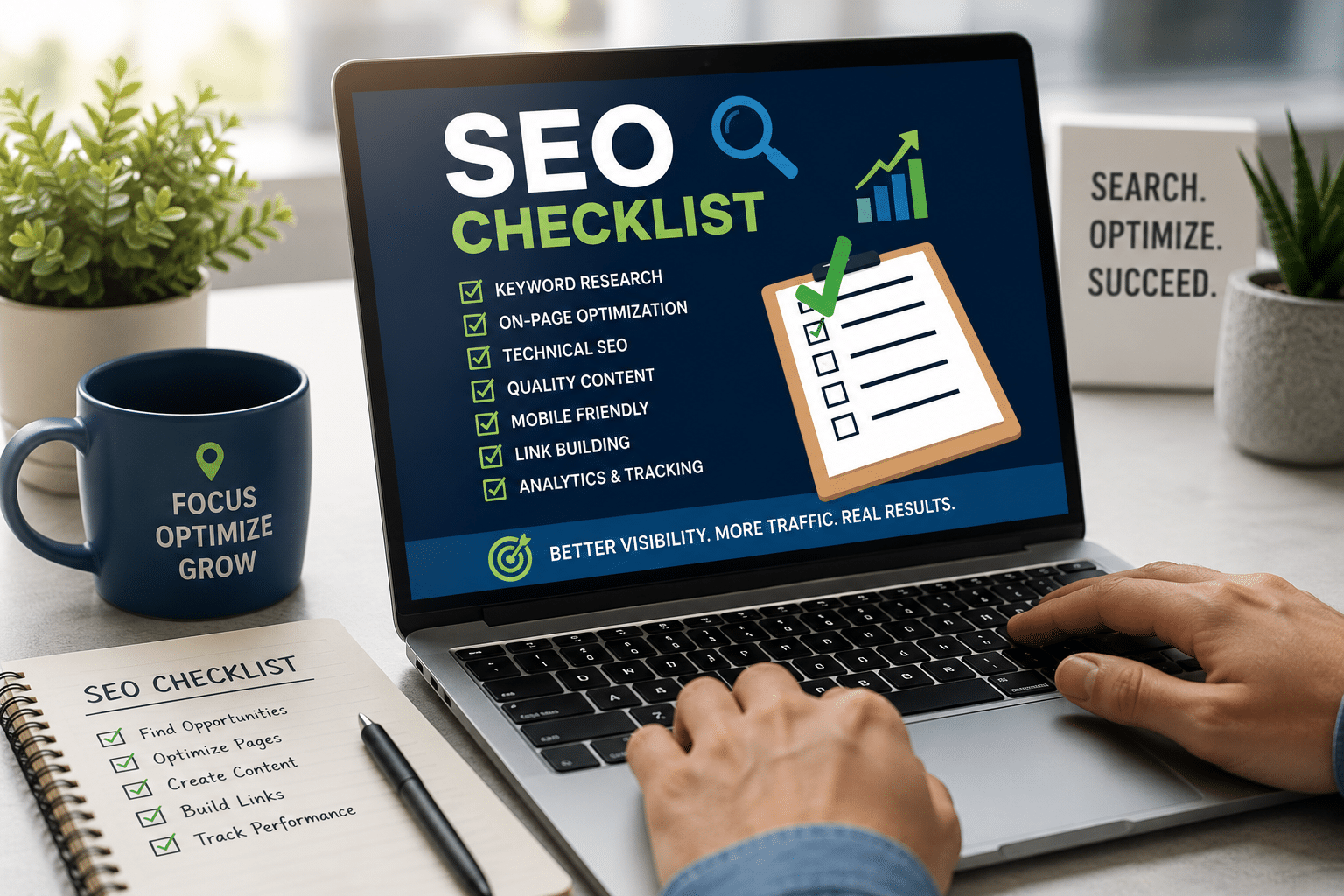
A few months ago, I was chatting with a local small business owner right here in St. George. He had just poured thousands of dollars into a gorgeous new website. Honestly, it was stunning. It featured a clean layout, loaded instantly, and showcased his services perfectly.
There was just one massive problem. Almost nobody was finding it.
He had fallen into a classic trap, assuming that the second a website goes live, Google magically opens the floodgates and sends local customers sprinting his way. But a beautiful website without search engine optimisation is like a gorgeous billboard sitting out in the middle of the Mojave Desert. It does not matter how pretty it is if the only things looking at it are the tortoises.
If you run a Small Businesses in Washington County, you have probably stared at your screen wondering why that competitor down the road on River Road is constantly outranking you, or why your phone isn’t ringing despite your shiny digital investment.
It is almost never one giant mistake holding you back. Usually, it is a collection of tiny, easy-to-miss details that pile up over time. According to industry data, over 90% of all websites get zero organic traffic from Google. Let’s make sure your business belongs in the 10% that actually gets noticed.
1. The 5-Second Reality Check
Before you touch a single keyword, pull up your homepage and look at it through the eyes of a customer who has never heard of you. Within five seconds of landing on your page, can a visitor instantly figure out these three things?
- What you actually do (without making them guess)
- Why they should choose you over the guy down the street
- How to quickly contact you
It sounds incredibly basic, but you would be amazed how many businesses hide their phone numbers or bury their main services under vague, flowery slogans. If someone has to go on a treasure hunt just to find your email or figure out your service area, all the web traffic in the world won’t save your bottom line. Working with an experienced website design agency can fix these structural flaws early on, making it effortless for visitors to become paying customers.
2. Speak Like a Local, Not a Corporate Brochure
We get used to talking about our businesses using industry jargon, but that is rarely how people actually search. Think about it this way. A local contractor might fill his site with terms like “bespoke outdoor living structures”. Meanwhile, a homeowner sitting in their living room during a 110-degree St George July is just typing “patio builder near me” or “who does patio roofing in Dixie” into their phone.
To fix this, start paying attention to the exact phrases people use when they call you or fill out your contact form. What questions do they ask? Those real-life conversations are your absolute best source for keywords. When your website answers the exact questions your community is asking, both Google and your future customers take notice.
3. Claim and Use Your Google Business Profile
If you are a local service provider or shopfront, this is the lowest-hanging fruit on the tree. In fact, proximity and a complete profile are the top ranking factors for local map results.
Too many owners claim their Google listing, fill out the bare minimum, and never look at it again. Treat it like a living extension of your business instead. Populate it with real photos of your latest projects around town. Keep your hours updated, especially around holidays. When someone leaves a review, reply to it quickly and politely, even if it is a less-than-stellar rant. Google loves active businesses because active businesses give searchers accurate, reliable information.
4. The Mobile Bottleneck
Do yourself a favor right now. Pull out your phone, turn off your Wi-Fi to test true cellular speed, and open your website.
How does it feel? Can you read the text without pinching the screen? Can you tap a button without accidentally hitting three other things? Can you click your phone number and instantly initiate a call?
Over 60% of all core Google searches happen on mobile devices, and that number climbs even higher for local services. Whether someone is looking for an emergency plumber while their water heater floods the garage or trying to find a place to eat near Snow Canyon, they are using a phone. If your mobile experience is frustrating, people will hit the back button faster than you can blink, and Google will drop your rankings accordingly.
5. Stop Writing Filler, Start Solving Problems
A common trap is writing blog posts or content just for the sake of checking a box. If you are writing generic updates that nobody cares about, you are wasting your time. Instead, look back at your last ten client interactions.
- Did someone ask how long a typical job takes?
- Did they ask what factors drive the price up or down?
- Were they debating whether to repair an old system or replace it entirely?
Every single one of those questions is a goldmine for a dedicated page or article. Write your answers exactly the way you would explain it to someone sitting across your desk. Keep it simple, keep it honest, and lose the heavy technical jargon. Helpful, straightforward answers stay relevant and bring in organic traffic for years.
6. Ditch the Shady Links for Real Community Ties
You have probably heard that getting other websites to link to yours, known as backlinks, is good for SEO. It is true, but the type of link matters infinitely more than the quantity.
Do not fall for sketchy online offers promising hundreds of links from random websites you have never heard of. Google caught onto that trick years ago and will penalize your site. Instead, focus on building actual relationships here in Southern Utah. Sponsor a local Little League team, join the St. George Area Chamber of Commerce, or partner up for a joint promotion with a non-competing business down the street. The natural, high-quality links you get from local sponsorships and community partners carry genuine weight with search algorithms.
7. Track What is Working and Stop Guessing
SEO is a marathon, not a sprint. Some changes move the needle in a few weeks, while others take months to really show up. That is why you need to look at the scoreboard rather than guessing.
Setting up free tools like Google Analytics and Google Search Console lets you see the actual data. Look for the stories the numbers are telling you. If a specific blog post is getting hundreds of visits but zero phone calls, the content is fine, but your call to action is probably missing or weak. If another page is silently driving all your actual leads, figure out what makes it work and duplicate that strategy across the rest of your site.
Knowing When to Partner Up
Plenty of small business owners handle the basics of SEO themselves. If you have the time and consistency, you can get a lot of traction just by following this checklist.
But as your business scales, managing keywords, technical site performance, and local content strategy can become a full-time job you just do not have hours for. If you reach the point where you want to hand off the technical heavy lifting to a professional team, partnering with a transparent SEO Agency St George Utah can help you scale your rankings while you focus on running your operations.
At the end of the day, ranking high on Google is not about deciphering some secret magic formula. The businesses that consistently win local search are simply the ones that answer customer questions honestly, keep their information fresh, and build a reputation for being reliable both online and off. Pick one small thing on this list to fix this week, and build your momentum from there.
Good Design Supports Great SEO
Ranking well is only part of the journey.
Once visitors arrive, your website needs to convince them to stay.
Working with an experienced website design agency can improve navigation, readability, page structure, and the overall customer experience, making it easier for visitors to become paying customers.
Final Thoughts
There is no secret formula that guarantees the number one position on Google.
Businesses that consistently perform well usually share the same habits. They answer customer questions honestly, keep their websites updated, earn trust within their communities, and focus on providing a better experience than their competitors.
If this checklist feels overwhelming, do not try to tackle everything at once.
Choose one improvement this week.
Maybe it is updating your Google Business Profile.
Maybe it’s an agency moving to a SEO, Utah, page.
Maybe it is writing an article that answers a question customers ask every day.
Those small improvements may not seem dramatic in the moment, but they add up. Months from now, you will be glad you started today rather than waiting for the perfect time.
SEO is rarely about doing one thing exceptionally well. More often, it is about doing many small things consistently. Over time, those efforts build trust with both search engines and the people who matter most, your future customers.
Frequently Asked Questions
How long does it actually take to see results from SEO in St. George?
Honestly, you are not going to see your phone blow up tomorrow morning. If an agency promises to put you on page one in two weeks, they are lying to you. In a competitive local market like Washington County, you should expect to start noticing real shifts in your traffic and phone calls around the three to six month mark. It takes time for Google to crawl your new content, index your changes, and realize that you are a trusted local authority.
Do I really need to write blog posts if I just run a local service business?
You do not need to write long, boring essays about the history of plumbing or landscaping. But think about this: when we get a sudden freezing night in January, local homeowners panic and search for “how to keep pipes from freezing in St. George.” If you have a simple, helpful post on your site answering that exact question, those panicked homeowners are going to call you first. You do not need to write every day, but answering common customer questions is the easiest way to prove you know your stuff.
What is the biggest difference between website SEO and my Google Map ranking?
Think of your website SEO as your long-term digital footprint and your Google Business Profile as your local neighborhood billboard. Your website ranks for broader searches, like detailed guides or specific service descriptions. Your Google Map listing is what pops up when someone is driving down Sunset Boulevard and searches “mechanic near me.” You need both to succeed, but your Map listing relies heavily on your physical location, customer reviews, and keeping your business hours accurate.
Can I just buy a cheap bundle of backlinks online to save money?
Please do not do this. It is one of the fastest ways to get your website completely banned from Google search results. Those cheap packages you see online for fifty dollars buy links from sketchy, automated networks overseas. Google is incredibly smart. When it sees a local St. George tile installer suddenly getting linked by hundreds of random blogs in Eastern Europe, it flags your site as spam. Stick to real, local relationships instead.
How often do I realistically need to update my website?
You do not need to spend hours tweaking your site every single week. A great rule of thumb is to set aside thirty minutes once a month. Use that time to upload a few fresh photos of your latest projects in Santa Clara or Hurricane, post your newest customer reviews, or update your operating hours for upcoming holidays. This small habit shows both Google and your potential customers that you are actively open for business.