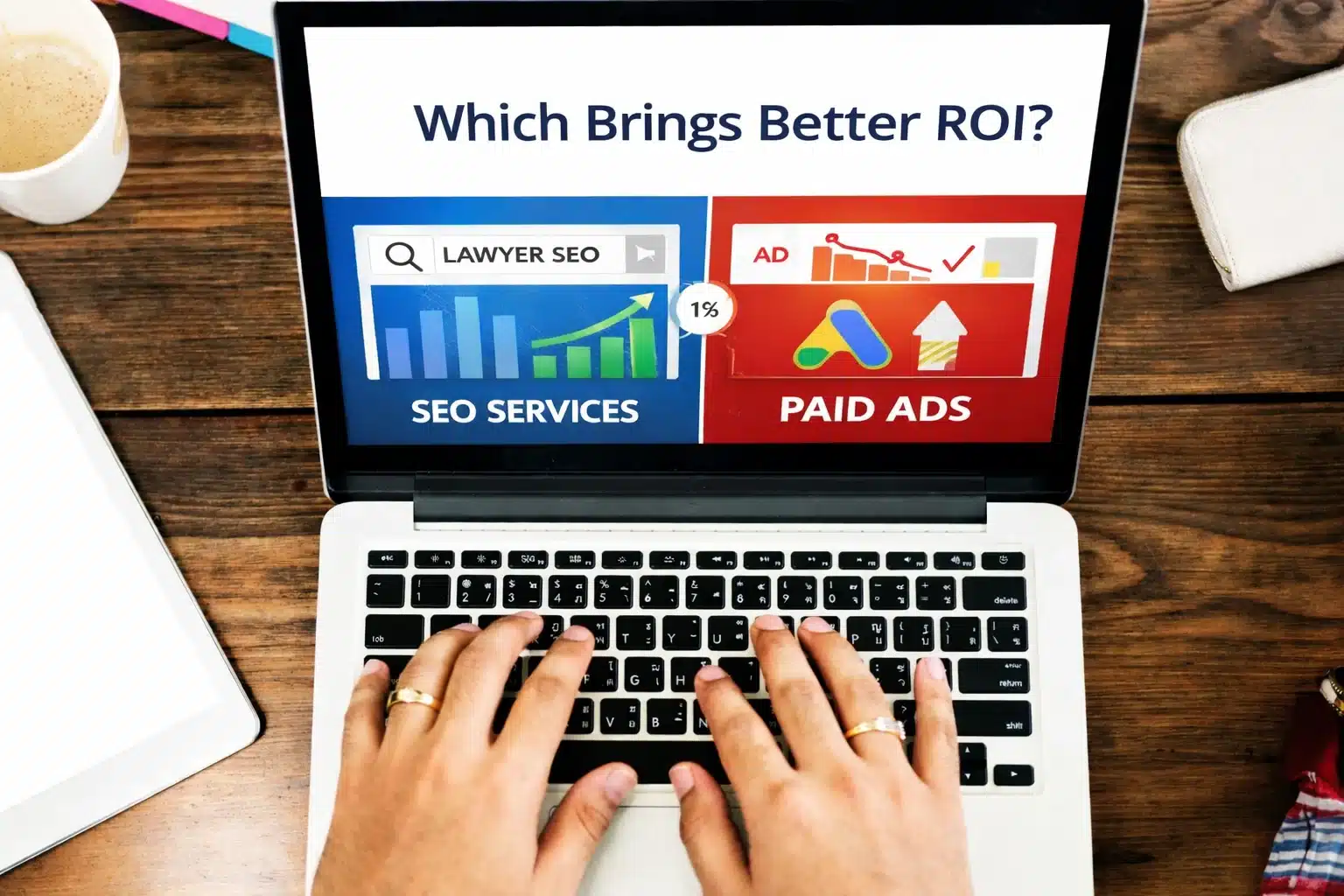
Businesses investing in digital marketing often face an important question: Should they focus on Search Engine Optimization (SEO) or Pay-Per-Click (PPC) advertising? Both strategies help businesses reach potential customers through search engines, but they work differently and deliver results on different timelines.
SEO services helps businesses improve their organic search rankings and attract visitors without paying for every click. PPC allows businesses to pay for advertising placements and reach targeted audiences more quickly. While both can increase website traffic, leads, and sales, the right choice depends on your budget, business goals, competition, and expected return on investment (ROI).
In this guide, we will compare SEO vs. PPC, explain their costs and benefits, and help you decide which marketing strategy can deliver better ROI for your business.
What Is SEO?
Search Engine Optimization (SEO) is the process of improving a website so it appears more prominently in organic search results. It focuses on helping search engines understand your content and making your website useful for people searching for your products or services.
SEO typically includes three main areas such as “SEO company in St. George, UT” or “digital marketing services near me.”
- On-page SEO: Improving page titles, meta descriptions, headings, keywords, internal links, and website content.
- Technical SEO: Improving website speed, mobile usability, crawlability, indexing, and structured data where appropriate.
- Off-page SEO: Building relevant backlinks, earning brand mentions, and strengthening website authority.
Benefits of SEO
- Long-term organic traffic
SEO can bring visitors to your website for months or years when your pages continue to rank well and meet users’ needs. Unlike paid advertising, organic search traffic does not require a payment for every click.
- Better long-term ROI potential
Although SEO requires investment in content, technical improvements, and ongoing optimization, successful pages can continue generating leads after their initial creation.
- Builds trust and credibility
Many users explore organic search results when researching a business or comparing service providers. Strong rankings, helpful content, and a professional website can support trust and credibility.
- Supports the entire customer journey
SEO can attract users who are researching a problem, comparing solutions, or ready to contact a service provider. Informational blogs and service pages help reach people at different stages of the buying process.
Limitations of SEO
SEO takes time. Depending on competition, website history, content quality, and technical issues, meaningful results may take several months or longer. Rankings can also change because of search engine updates and competitor activity.
SEO is therefore best suited to businesses that want to build lasting online visibility rather than depend entirely on immediate traffic.
What Is PPC Advertising?
Pay-Per-Click advertising is a digital marketing model in which advertisers pay when users click on their ads. Google Ads is one of the most common platforms for PPC campaigns.
PPC ads can appear above organic search results and target users based on search terms, location, audience characteristics, and other available campaign settings.
For example, a business offering website development could run ads for “hire a website developer” or “professional website development services.” When someone clicks an ad, the advertiser pays according to the campaign’s bidding and pricing model.
Benefits of PPC
- Faster visibility
PPC campaigns can begin generating visibility and traffic soon after approval and launch. This makes them useful for businesses that need leads quickly or want to promote a time-sensitive offer.
- Targeted advertising
Businesses can focus campaigns on particular locations, search terms, audiences, and conversion goals. This helps direct advertising budgets toward relevant potential customers.
- Measurable campaign performance
PPC platforms provide data on clicks, impressions, spending, conversions, and other metrics. This information helps marketers identify which campaigns and keywords are generating results.
- Budget flexibility
Businesses can set campaign budgets, adjust bids, pause underperforming ads, and test different messages or landing pages. However, results depend on competition, campaign quality, and the budget available.
Limitations of PPC
PPC requires ongoing spending to maintain paid traffic. When a campaign stops, its advertising visibility generally stops as well.
Costs can also rise in competitive industries, and a large number of clicks does not guarantee sales. Poor keyword selection, weak landing pages, or ineffective conversion tracking can waste advertising money.
PPC works best when campaigns are carefully managed and connected to clear business goals.
SEO vs. PPC: Key Differences
SEO and PPC both help businesses appear in search results, but their costs, timelines, and long-term benefits differ.
| Comparison | SEO | PPC |
| Traffic source | Organic search results | Paid advertisements |
| Time to see results | Usually takes months | Can generate traffic soon after launch |
| Cost structure | Investment in content, optimization, and maintenance | Advertising spend plus campaign management costs |
| Cost per click | No direct payment for organic clicks | Usually charged when an ad is clicked |
| Long-term potential | Can continue attracting traffic over time | Traffic generally depends on continued ad spend |
| Budget control | Requires prioritizing ongoing SEO work | Budgets and bids can be adjusted |
| Trust building | Can support organic visibility and credibility | Provides paid visibility and promotional reach |
| Best suited for | Sustainable growth and long-term visibility | Immediate reach and targeted lead generation |
Neither strategy guarantees results. Their effectiveness depends on how well the campaign or website meets user needs and converts visitors into customers.
Which Strategy Delivers Better ROI?
The answer depends on what your business needs and how you measure success.
SEO may deliver stronger long-term returns when a website consistently attracts qualified organic traffic and generates leads without requiring a separate payment for each visit. PPC may deliver stronger short-term returns when campaigns target high-intent searches and convert clicks into profitable sales.
When SEO Delivers Better ROI
SEO can be a strong investment when your business wants to:
- Build long-term organic visibility.
- Reduce dependence on paid advertising over time.
- Reach customers searching for specific services.
- Publish helpful content that attracts potential customers.
- Establish authority in a competitive market.
- Generate leads from multiple relevant search queries.
For example, a service business that ranks for several valuable local search terms may receive consistent inquiries from organic visitors. Although SEO requires ongoing work, the accumulated value of well-performing pages can make it an effective long-term investment.
However, ranking highly for keywords that generate little business value will not necessarily produce a strong ROI. SEO efforts should focus on relevant searches, qualified traffic, and measurable conversions.
When PPC Delivers Better ROI
PPC may be more effective when your business needs to:
- Generate leads within a short timeframe.
- Promote a new service or limited-time offer.
- Reach customers searching for high-intent keywords.
- Test demand for a new product or service.
- Target specific locations or customer groups.
- Gather conversion data before expanding a campaign.
For example, a business launching a new service may use Google Ads to reach people actively searching for that service. If the campaign generates enough profitable leads at an acceptable cost, it can become a valuable part of the marketing strategy.
The key is to measure more than clicks. A successful PPC campaign should generate qualified leads, sales, or other outcomes that justify its total cost.
How to Calculate SEO and PPC ROI
To compare SEO and PPC fairly, measure the revenue generated against the total investment.
A basic ROI formula is:
ROI = (Revenue − Total Investment) ÷ Total Investment × 100
For example, suppose a business invests $2,000 in a marketing campaign and generates $6,000 in attributable revenue.
ROI = ($6,000 − $2,000) ÷ $2,000 × 100 = 200%
This example illustrates the calculation, not a typical or guaranteed marketing result.
When comparing SEO and PPC, include relevant costs such as agency fees, content creation, technical work, advertising spend, and campaign management. Where possible, use gross profit rather than revenue to understand whether the marketing investment is truly profitable.
Also consider the time period. SEO may require a longer evaluation window, while PPC can provide earlier performance data. Comparing both strategies over suitable periods creates a more realistic picture of their value.
SEO vs. PPC: Which Is Better for Small Businesses?
Small businesses often have limited marketing budgets, so choosing the right strategy is especially important.
SEO can be valuable for businesses that want to build visibility in their local market, attract recurring organic traffic, and create useful content around their services. Local SEO can help businesses reach customers searching for providers in a specific city or service area.
PPC can be useful when a business needs immediate exposure, wants to test demand, or operates in a market where organic rankings take time to improve.
The best choice depends on your situation:
- Choose SEO first if you can invest in gradual growth and want to build a lasting source of organic traffic.
- Choose PPC first if you need leads quickly and have a budget that supports profitable advertising.
- Consider both if you need immediate visibility while developing a long-term organic presence.
Businesses should also consider the quality of their website. If service pages are unclear, contact details are difficult to find, or landing pages fail to build trust, both SEO and PPC performance can suffer.
Why Combining SEO and PPC Can Improve Results
SEO and PPC do not have to compete with each other. In many cases, using both creates a more balanced digital marketing strategy.
PPC can generate traffic while SEO improvements are still developing. Meanwhile, SEO can build organic visibility that supports future growth and reduces dependence on paid clicks.
Combining both strategies can help businesses:
Identify valuable keywords: PPC campaign data can reveal which search terms generate qualified leads. These insights can inform SEO content planning.
Increase search visibility: Appearing in both paid and organic results can provide additional opportunities for users to discover a business, although the effect varies by search and audience.
Reach different stages of the buying journey: SEO content can answer research questions, while PPC campaigns can target users searching for specific services or ready to take action.
Improve landing pages: Conversion data from paid campaigns can help identify which messages, offers, and page layouts work best. Those insights can support improvements across the website.
Diversify traffic sources: Using both strategies reduces reliance on a single source of search traffic.
The goal is not simply to spend more on marketing. It is to use reliable performance data to allocate the budget toward the activities that generate the greatest business value.
Common Mistakes That Reduce Marketing ROI
Even a well-planned SEO or PPC strategy can underperform when important details are overlooked.
Avoid these common mistakes:
- Targeting keywords that attract visitors but rarely become customers.
- Measuring success only through rankings, impressions, or clicks.
- Sending paid traffic to irrelevant or poorly designed landing pages.
- Ignoring website speed and mobile usability.
- Failing to track phone calls, form submissions, and sales.
- Stopping SEO efforts before results have had enough time to develop.
- Running PPC campaigns without regularly reviewing performance.
- Focusing on traffic volume instead of lead quality and profitability.
A clear marketing plan should connect each activity to a measurable goal. Depending on the business, that goal may be qualified leads, booked appointments, online purchases, or increased revenue.
Conclusion: Choose the Right Digital Marketing Strategy With The Active Media
SEO and PPC can both deliver valuable results, but the better strategy depends on your goals, budget, competition, and timeline. SEO is a strong option for building long-term organic visibility, while PPC can help businesses reach potential customers more quickly. For many businesses, combining both strategies provides a practical balance between immediate results and sustainable growth.
Choosing the right approach requires more than increasing website traffic. You need a strategy that attracts the right audience, improves conversions, and supports measurable business growth.
The Active Media helps businesses strengthen their digital presence through SEO, PPC, and data-driven digital marketing strategies. Whether you want to improve organic search rankings, generate targeted leads through paid campaigns, or develop a balanced marketing plan, The Active Media can help align your efforts with your business objectives.
Visit The Active Media to explore digital marketing solutions designed to improve online visibility, attract qualified prospects, and support long-term business growth.