Let me paint a quick picture for you, which will help you to understand answer engine optimization. It’s late afternoon, your second cup of coffee is half gone, and you blurt out to your phone, “Okay, seriously, what’s the simplest way to make cold brew that actually tastes good?” Instead of dumping ten search results on you, the AI just tells you the steps, name-drops a solid brand or two (hopefully yours), and pulls a useful tip straight from someone’s blog. No tabs, no ads, no fuss.
I’ve been in digital marketing long enough to see shifts like this before. This one feels different because it’s not just about traffic anymore; it’s about being the voice the AI trusts enough to repeat.
So… What Actually Is AEO?
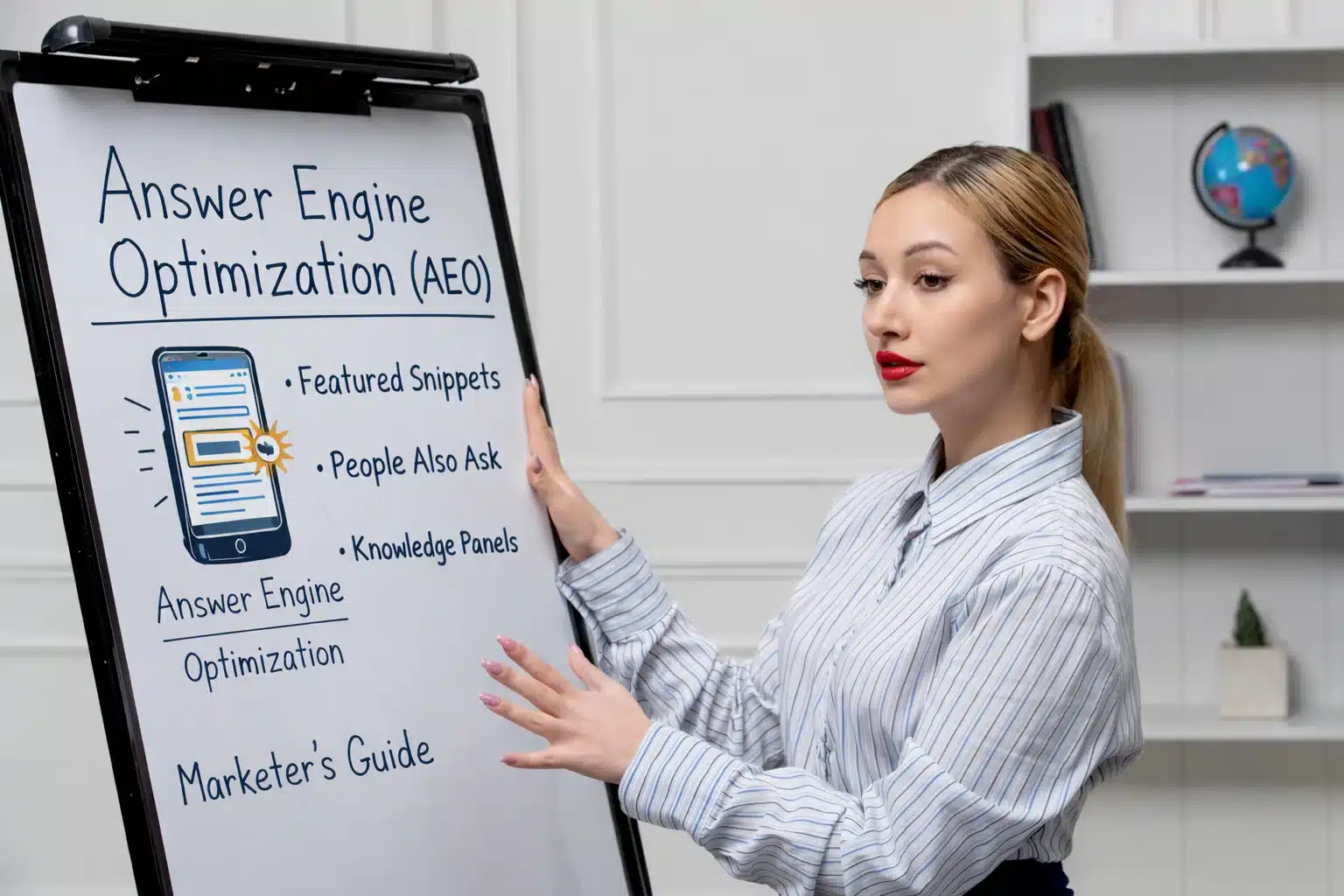
It’s pretty straightforward once you strip away the jargon. AEO means writing and structuring your content so AI systems (think ChatGPT, Gemini, Perplexity, voice assistants, and even those summary boxes in Google) can easily read it, believe it, and use it when someone asks a real question.
The dream outcome? Your brand or your advice shows up in the answer without the user ever needing to click your site. You get the exposure and the credibility bump anyway.
What tends to win here:
- Super clear, human-sounding answers written like you’re talking to a friend
- Short paragraphs, bullet points, numbered steps, stuff that’s easy on the eyes (and on AI parsers)
- Schema markup for FAQs, how-tos, products, etc., because it basically hands the key facts to the machine on a silver platter.
- Real originality: your own data, fresh takes, personal experience instead of rehashed fluff
- Mentions and shout-outs from other reputable places (the more the better)
Here’s a real example I like: A small coffee roaster writes an honest comparison post. “Cold Brew vs Iced Coffee: My Honest Taste Test After 30 Batches.” They answer every annoying follow-up question people actually ask. When done well, that article starts fueling AI replies everywhere. Businesses offering digital marketing services in the USA tell me they’re already layering AEO into their plans because it quietly boosts visibility in these answer-heavy channels.
AEO vs. SEO—They’re Cousins, Not Twins
I still hear people say, “AEO is just SEO with better content.” “Eh… sort of, but not really.”
Classic SEO is built around getting ranked high so people click through, spend time on your page, and maybe buy something. You chase keywords, nurture backlinks, and obsess over page speed, mobile layout, and title tags, all the usual suspects.
AEO cares way more about being chosen as a reliable source for the final answer, even if zero people click. It’s less “drive traffic” and more “get quoted.” So the priorities shift toward the following:
- Answering the full question right away in plain language
- Making your expertise obvious (who wrote this?). Why should we trust them?
- Being easy to extract: clear structure, named entities, no walls of text
- Earning trust signals from across the internet
Quick side-by-side that usually clicks for people:
What We’re After |
Traditional SEO |
Answer Engine Optimization |
| Main Win | Clicks → visits → conversions | Citations → brand recall → indirect traffic |
| User Flow | Search → click → read site | Ask → instant answer (maybe no click) |
| Content Vibe | Keyword-smart and scannable | Question-first + authoritative + natural |
| How You Measure It | Rankings, sessions, conversion rate | AI mentions, branded search uplift, share of voice in answers |
| Where It Lives | Google / Bing SERPs | ChatGPT, Gemini, voice tools, AI overviews |
The punchline? Great SEO still feeds great AEO. Clean sites with strong content give AI better material to pull from. But you can rank #1 and still get zero AI love if your page doesn’t read like the perfect answer. I’ve seen this hit home hard for specialized outfits like an SEO company in Utah that suddenly realizes they need to play in both sandboxes to stay visible.
Why Everyone’s Suddenly Talking About This in 2026
The shift isn’t subtle anymore:
- Around 37% of early-stage research now starts in conversational AI instead of classic search.
- Big AI chat platforms crossed 800 million weekly active users earlier this year.
- Google’s AI Overviews appear in over 1 in 5 searches in major markets.
- Forecasts say organic click-through traffic could slide 20–30% by 2028 as more people just accept the summarized answer.
The brands figuring this out early are already seeing side benefits: spikes in direct branded searches, more newsletter signups, and random social mentions, even when their Google clicks haven’t moved much.
For anyone running marketing campaigns, ignoring AEO means you’re slowly disappearing from a channel that’s growing fast. Jumping in means you get heard exactly when someone’s asking for help. Niche verticals feel this quickest; law firms are a perfect case. When the best SEO companies for law firms started treating AEO seriously, their clients began popping up in AI legal-advice answers way more often.
Okay, How Do I Actually Do This?
Here’s the practical checklist I give clients when they want to start:
- Find the real questions. Poke around. Answer. The public also asks, or just asks Perplexity/ChatGPT variations of your topic. Write down what people actually type.
- Rewrite with the answer first. Make the question a heading, then give the straight answer underneath. No 800-word intro.
- Add schema where it fits. FAQPage, HowTo, Product—whatever matches. It’s low effort for big readability gains.
- Create citation bait. Original stats, your own tests, expert quotes, and contrarian takes. AI loves unique stuff.
- Get third-party love. Guest posts, podcast appearances, Reddit value-add comments, and journalist quotes. Diverse positive mentions = higher trust score.
- Test like crazy. Ask your target questions in different AIs every couple of weeks. Track what wins. Tools like Semrush and BrandMentions help spot patterns.
A lot of teams handling pay per click services in USA are quietly adding AEO layers now—it complements paid ads by owning the organic answer space too.
Pick one decent piece of content this week. Rewrite it like you’re explaining it over drinks. Add schema. Share it around. Check back in a couple of months; you’ll probably be surprised how often it starts showing up.
Final Thought
AEO isn’t replacing SEO. It’s just the next room in the same house. As more people default to asking instead of searching, the brands that sound helpful, credible, and human in those answers are going to win big slices of attention.
The people testing this stuff right now, measuring, tweaking, and learning, are the ones who’ll look smart in 2027.
Grab one article today and make it ridiculously easy for an AI to love. You might just hear your own words coming back at you from someone’s speaker tomorrow.